"Everyone Is Looking for Their Cat"
A pet, a digital icon, a mystical figure… Beneath its familiar appearance, the cat reveals a symbolic realm infinitely vaster than it seems.
At first glance, the subject—almost anecdotal—might raise a smile. An exhibition dedicated to cats at an urban art center in the heart of Paris has all the makings of a playful nod to popular culture or a facile visual pretext. Yet with “Chacun cherche son chat,” Eva Quintard takes a very different direction. For her first curatorial project, she transforms this familiar figure into a terrain for symbolic, artistic, and emotional exploration. “At first, the idea of an exhibition dedicated to cats was almost a joke,” she admits. “Then, after doing some research, I realized just how incredibly rich the subject is. The cat spans eras, cultures, and imaginations: from the sacred cat in Egypt to the mysterious creatures of the Middle Ages, right up to its ubiquity on social media today. It’s a figure that speaks to freedom, marginality, independence, grace, beauty… It’s a vast subject.”


The Cat as a Common
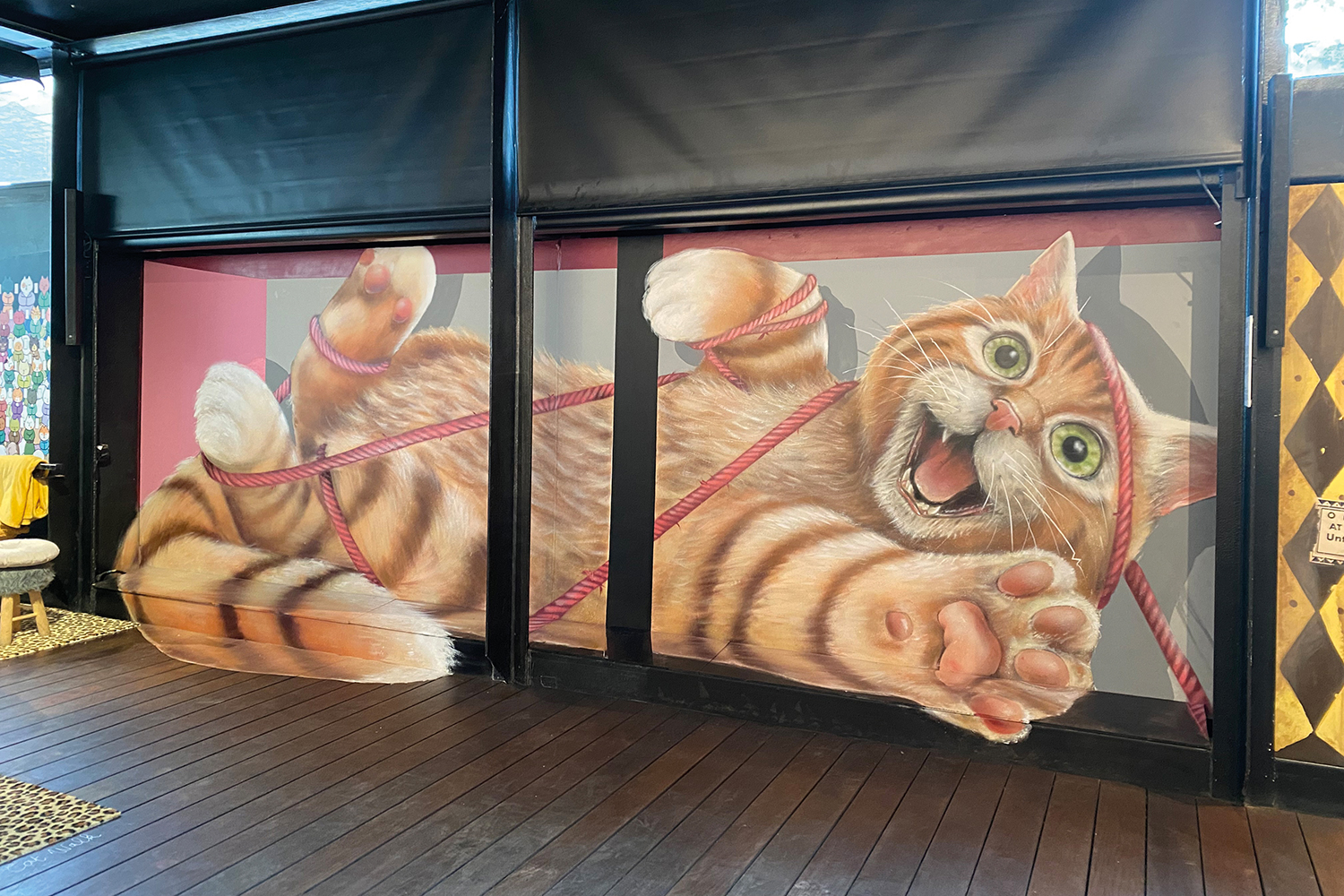
Language Very early on, Eva Quintard rejected the idea of a mere accumulation of decorative feline imagery. “I definitely didn’t want to treat the cat as a simple aesthetic motif. I was solely interested in what this figure symbolically implies in our history and in our collective imagination.” The project thus brings together about ten artists from the urban art scene, invited to freely interpret this figure that is both familiar and elusive. Madame, Veks Van Hillik, Kraken, Kesadi, Scaf, Wenna, Ardif, Mosko, Agrume, Clet, Dran, and Ruben Carrasco create a journey in which the cat successively becomes a psychological mirror, a mystical creature, a kitsch icon, a philosophical character, or a comforting presence. “The cat has become a common language among all these artists. Each has approached it through their own sensibility, history, and artistic vocabulary. The idea was not to depict cats, but to reveal what they say about us.” From one work to the next, the feline becomes a psychological mirror, a mystical figure, a digital icon, or a philosophical character.
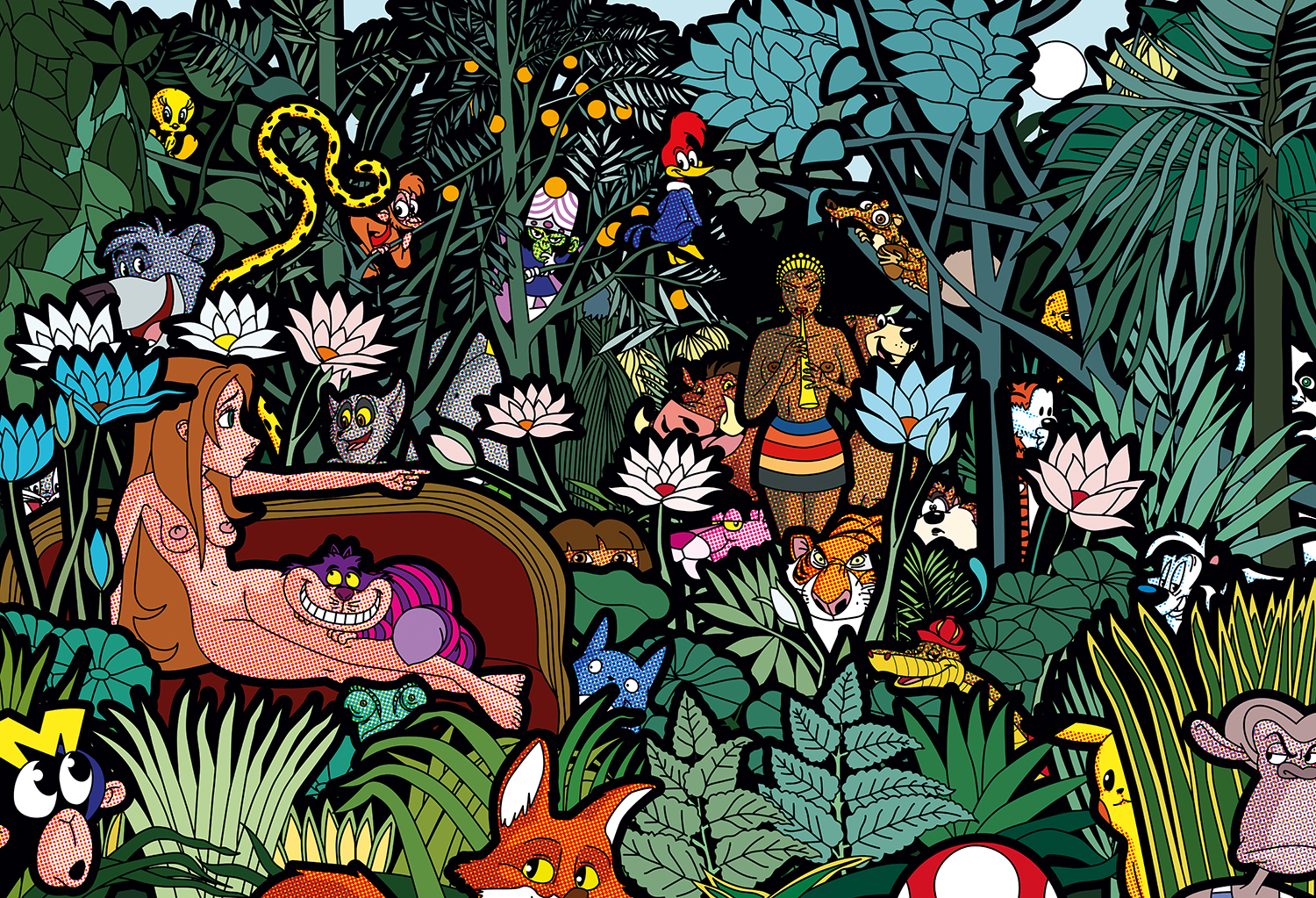
Madame delves into the world of Edgar Allan Poe’s “The Black Cat” through an immersive and claustrophobic installation. “In her work, the cat becomes a revealer of the dark aspects of human nature,” the curator emphasizes. Conversely, Veks Van Hillik draws on quantum physics with an interpretation of Schrödinger’s famous cat. “He envisions an installation where the visitor looks through a keyhole to determine the cat’s state for themselves. It’s extremely clever because the viewer becomes an active participant in the work.” At Kraken, the cat emerges as a kitsch figure found at flea markets and a viral icon on social media. “This speaks to our relationship with images, with constant scrolling, and with this daily visual consumption.” Kesadi, for his part, transforms the feline into the main character of a comic strip on a 10-meter mural. Wenna evokes Chinese mythology through a pantheon of feline deities, while Scaf imagines a monumental anamorphosis designed to inspire wonder.
A Gateway to Art
The diversity of artistic styles is one of the exhibition’s key balancing elements. “It was essential to showcase the richness of urban art. This scene is still too often reduced to a purely spectacular or decorative interpretation, when in fact there is genuine substance behind these practices,” insists Eva Quintard. “Each artist has developed a highly structured reflection on the subject and written a detailed artist’s statement.” This desire to break down barriers in how art is perceived guides the entire project. For several years now, Eva Quintard has been working in direct contact with Fluctuart visitors. This experience has profoundly shaped her approach to art education and her relationship with audiences. “The cat is a wonderful vehicle for democratizing art without diminishing it. It’s a popular figure, immediately accessible—a gateway to literature, poetry, mythology, quantum physics… and even our relationship with time.” The exhibition is thus based on a form of intimate identification. “The artists have identified their own feline figure—the one that resonates with their artistic approach and sensibility. It is now up to visitors to recognize their own.” Each work thus acts as a familiar presence capable of evoking memories, emotions, or personal experiences. “These cats capture the viewer’s attention, create a connection, and then take them somewhere else.”
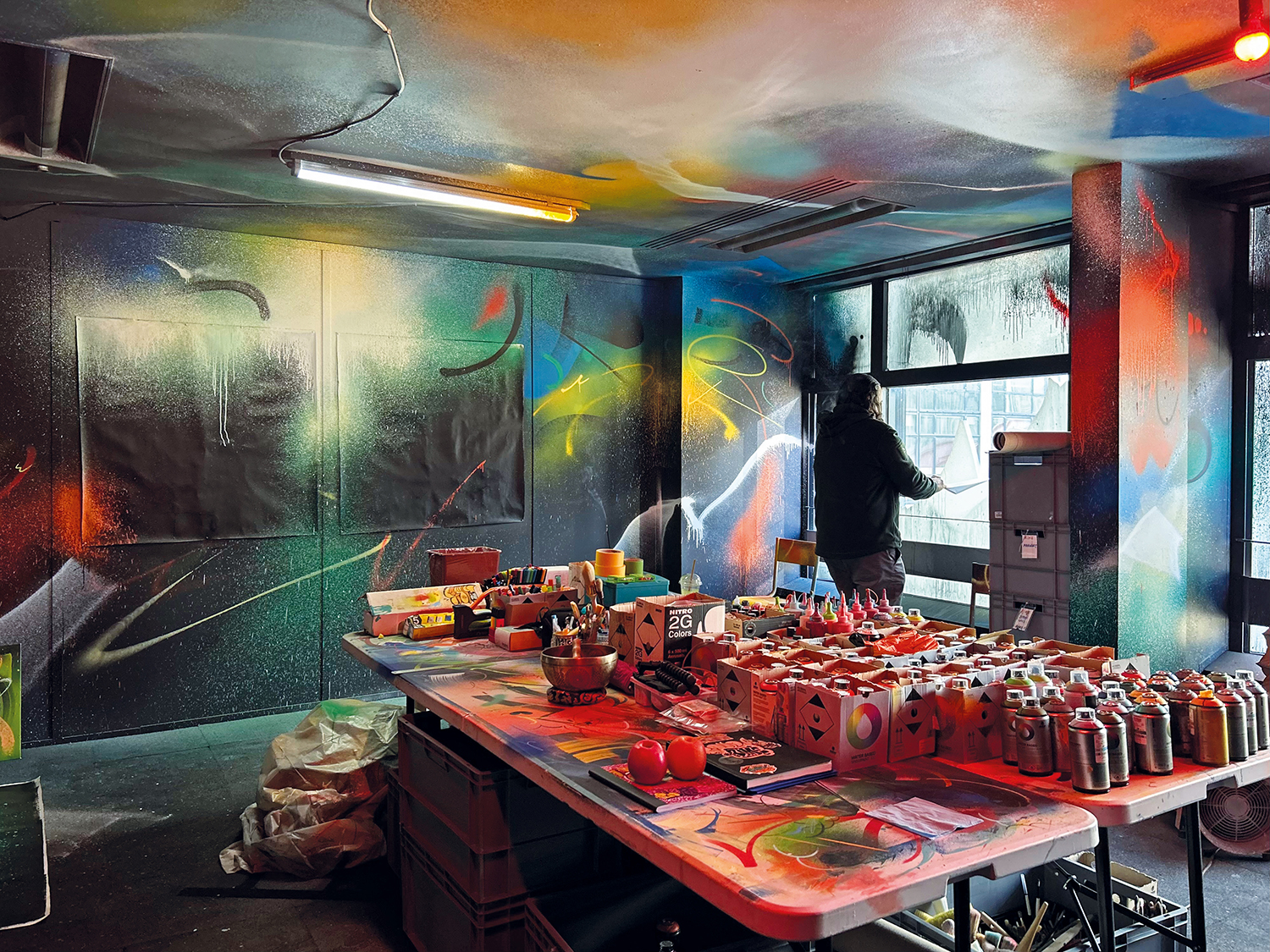
This relationship—centered on the gaze and time—is one of the exhibition’s underlying themes. “Today, images are constantly flashing by. Very few people still take the time to truly look. Yet cats teach us to slow down and impose a different sense of time.” It is in this spirit that the Cozy Cat Corner was conceived, a space designed as a moment of respite within the exhibition itinerary. “It’s a place where you can sit, observe, and contemplate. A way to get into the cat’s rhythm.” The exhibition also embraces an experimental dimension, as a large portion of the works were created directly on site. “As a center for urban art, Fluctuart’s mission is also to serve as a laboratory. That’s why the exhibition will primarily feature works and installations conceived and created on-site.” Behind its apparent lightheartedness, “Everyone Is Looking for Their Cat” ultimately speaks as much to the way we see the world as to how we inhabit it. It is an exhibition in which the cat becomes a canvas for projection, a silent companion, and an intimate revealer.
Not to Be Missed
: “Everyone’s Looking for Their Cat”
Through August 23, 2026
Every day from 12:00 p.m. to 12:00
a.m. Fluctuart
Pont des Invalides – Port du Gros Caillou 75007 Paris
fluctuart.fr
Instagram: @fluctuart