Bordeaux: A Treasure Trove of Talent Waiting to Be Discovered
Long referred to as the “Sleeping Beauty,” the Aquitaine metropolis has been experiencing a veritable cultural boom in recent years. And street art is no exception to the rule, with a particularly active local scene.
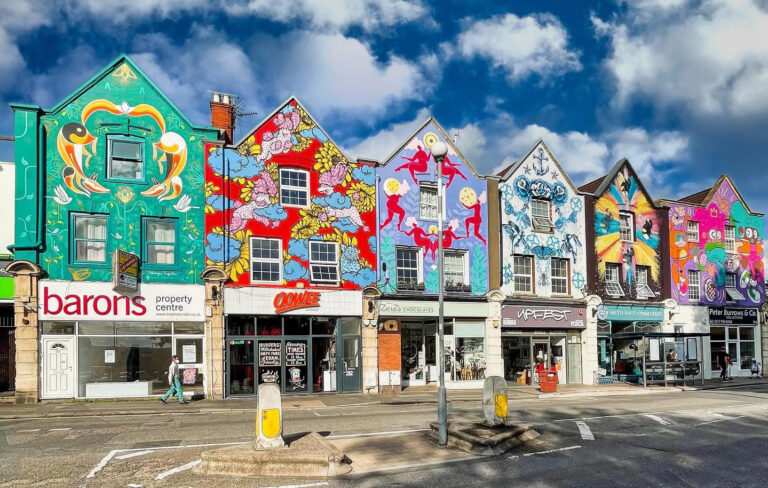
 Like all major French cities, Bordeaux has long been the scene of a vandalistic and semi-clandestine street art movement. In the 1980s, a collective called Les Inflamables (with a single “m”) defaced the posters for the Keith Haring exhibition and spray-painted 70 meters of walls at the CAPC, the city’s contemporary art museum. Things changed radically starting in 2016, with recognition of the importance of urban art. From then on, City Hall decreed the launch of an annual street art season. Events included an intervention by the Monkey Bird collective at the Mériadeck ice rink, the creation of the Shake Wake Festival, the “Urban Legends” exhibition at the Submarine Base in 2018, and last year’s invitation to Spanish artist Gonzalo Borondo, who took over a historic site, the Temple des Chartons, which had been closed to the public for 50 years. Some thirty murals have thus been created in recent years, with the blessing and sometimes the funding of municipal authorities.
 A City Full of Surprises
Alexandre Vendé is the founder of the website Bordeaux en Français (bordeaux-en-francais.fr), which offers, among other activities, tours to discover street art in the city, culminating in a street art workshop to transition from observation to practice and leave with your own artwork. It was in New York, and more specifically at 5Pointz, that he discovered this artistic movement—now a must-see on city trips—which this tourism professional offers in the Big Apple, as well as in Miami, Chicago, Las Vegas, San Francisco, and Los Angeles. “We mustn’t forget that street art originated in Philadelphia, then flourished in New York, and that in recent years, Miami has established itself on the global stage with its famous contemporary art festival, Art Basel. If we’re comparing Bordeaux to these major American cities, it’s not even in the same league! Aside from Paris, no city in France can hold a candle to them. Bordeaux will never be New York, but New York will never be Bordeaux either, with its history, its magnificent buildings made of Bordeaux stone, its vineyards… The idea is to draw inspiration from the best practices and events that New York offers, and to try to transpose and adapt them here.” For this specialist, there is certainly no shortage of interesting sites. “The Darwin ecosystem boasts the highest concentration of artworks per square meter and the highest quality. It’s a must-visit for any urban art enthusiast. To me, it’s the Brooklyn of Bordeaux, with its alternative and artistic vibe.
 The artworks there are magnificent and change regularly, featuring mainly local artists but also many talents from all walks of life. Next, you should head to the Chartrons neighborhood. In this neighborhood, which feels like a charming little village within the city, you’ll find numerous works scattered throughout, as well as the M.U.R. Finally, in the Saint-Michel and Bacalan neighborhoods—and in the historic heart of the city—you can see many works, murals, collages, sculptures…” For Alexandre, street art has grown tremendously in recent years “through alternative venues like Darwin, but also thanks to the Pôle Magnétique association, the M.U.R., and several artists who have taken over large parts of the city—notably David Selor, Alber, Amo, Philippe Poulet—and who have brought color, aesthetic appeal, and humor to these spaces… “For me, street art is now part of the city, but in my opinion, it’s still too little known to most people in Bordeaux. Nevertheless, it’s slowly finding its place.” This evolution is particularly evident in the relationship between artists and public authorities. “Artists who have been in Bordeaux for a long time have seen a change over the past two or three years, both from the city and from the police. The authorities are significantly more lenient and permissive toward artists, even if things aren’t perfect yet. And now, artists also respect the city, particularly the historic center designated as a UNESCO World Heritage Site… Especially since the city has set aside a few spaces for artists to express themselves. You see them working at night or in the early morning. Both they and I—who have recently begun trying my hand at this art form I love—prefer quieter times.”
 The richness of local creativity
One of the keys to Bordeaux’s dynamism undoubtedly lies in the involvement of local actors, starting with Pôle Magnetic, an association founded by Pierre Lecaroz in 2013 that produces numerous artistic projects. It is notably behind the local version of M.U.R., which hosts a new artist each month for a temporary artwork. Its founder, Pierre Lecaroz, is a passionate amateur. “I started taking photos of street art in 2007, during my vacations, as a way to immortalize the ephemeral. I felt that these unauthorized interventions beautified public spaces and symbolized the convergence of my musical and graphic influences. That’s how my passion was born, and I chose to share it.” In early 2013, Pierre Lecaroz founded this hybrid organization, “serving as both an art gallery, an incubator for innovative projects, and a cultural mediator. Encouraging freedom of contemporary artistic expression, imagining new forms of escapism, bringing artists’ ambitions to life, creating spaces and opportunities for discovery and initiation, and working to ensure access to culture for all are the values embodied by the association.” For this key local player, there is no doubt: “Bordeaux lives, breathes, and dreams Street Art! The vitality of the local scene bears witness to this, with artists such as Stéphane Carricondo, Rouge, Tomas Lacque, Nasti, Darry Perier, Mika Husser, Bobaxx, Naïf, Jean Rooble, Trakt, Landroïd, Aerosept, Charles Foussard, Alber, and Mr. Kern…”
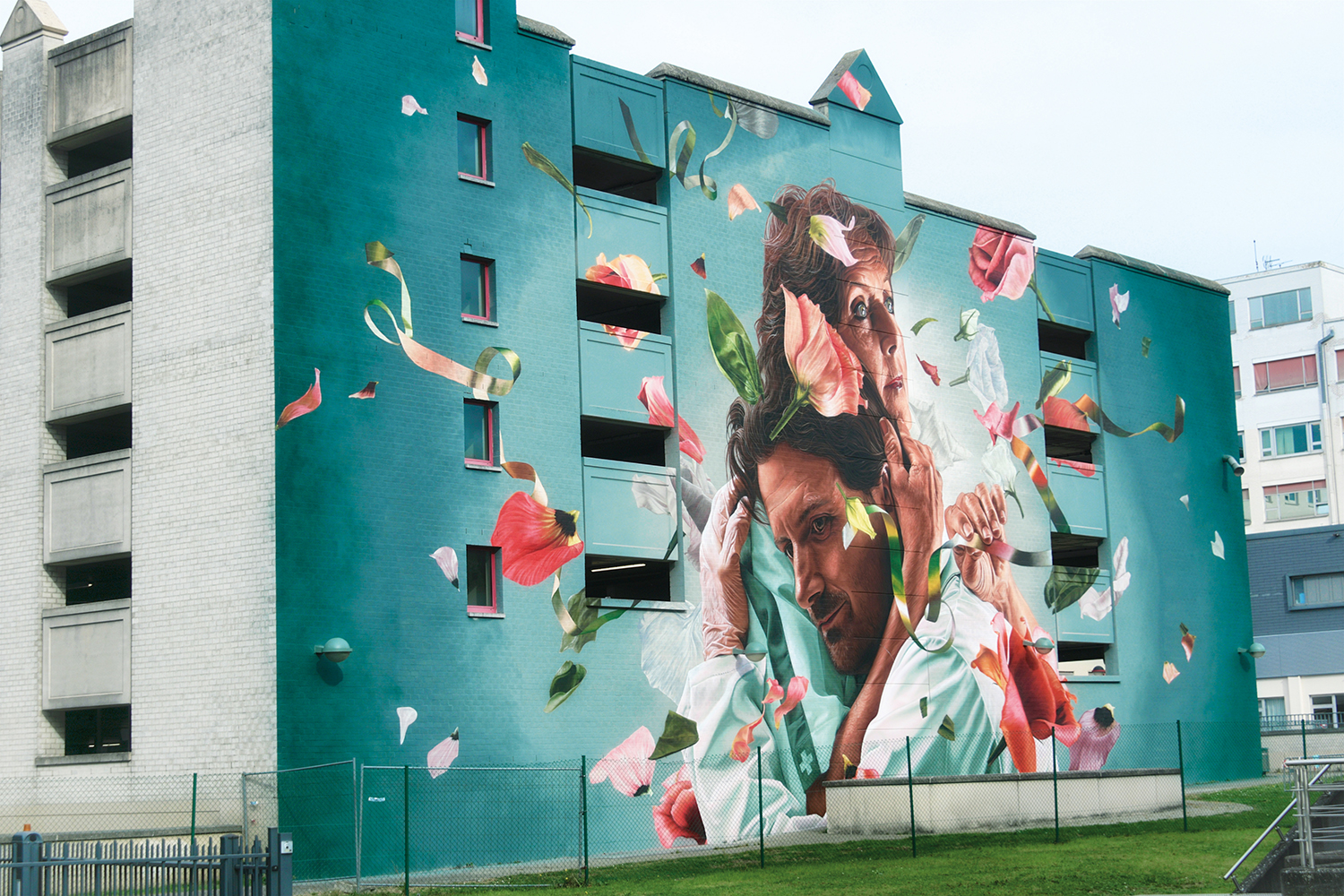
 Among the latest projects supported by Pôle Magnetic is the monumental 600-square-meter mural created on a building partially occupied by Orange in Villenave-d’Ornon, near the tram terminus—a €50,000 project funded by Bordeaux Métropole. “This project is unique because it incorporates the metropolitan area’s public art commission, titled ‘Art in the City.’ The project was led by the FAB (La Fabrique de Bordeaux Métropole) in consultation with local residents. There were significant challenges: the residents’ perception of this building, which they viewed as an eyesore, as well as the building’s structural constraints—including rough-cast walls, recesses, and windows. I made an artistic selection based on these technical constraints. Consequently, we had to opt for more abstract murals. Anything figurative was out of the question for this type of surface. In the end, three proposals were submitted to the residents, who voted, and the project was presented to elected officials. Initially, Stéphane Carricondo’s proposal was selected,” explains Pierre Lecaroz. Doesn’t this recognition stifle the vitality of local creativity? Pierre Lecaroz doesn’t think so. “It’s not all black and white! The institutionalization of street art in Bordeaux has contributed to the recognition and emergence of local artists. It has also provided access to public and private spaces that were previously off-limits, allowed for inclusion in subsidized cultural seasons, and thus generated a virtuous economic cycle. And nothing prevents artists from continuing their illegal practices on the side.” Much to the delight of visitors.