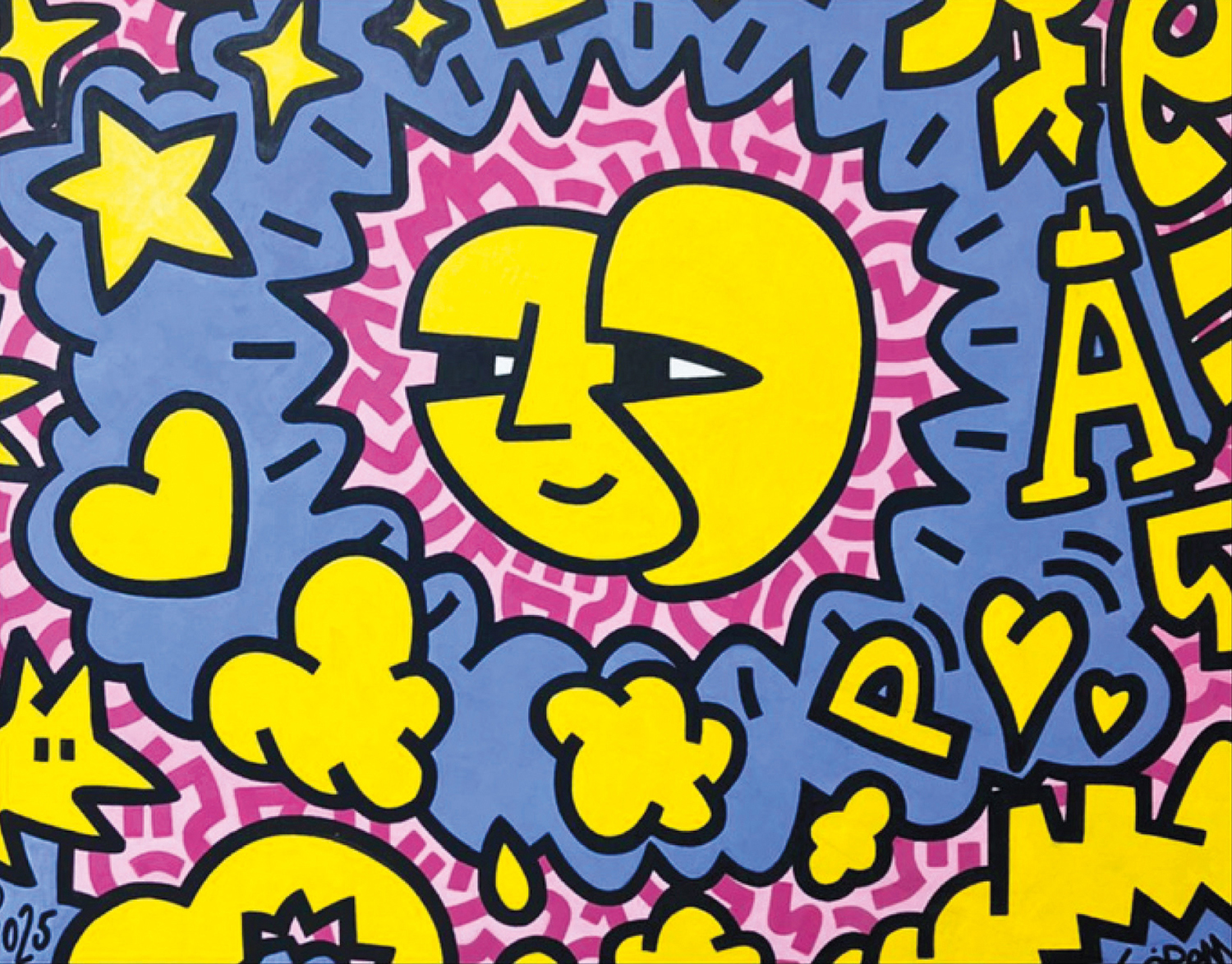
Mehdi Mlc: A Language Rich in Symbols and Meaning
True to the spirit of graffiti, Mehdi Mlc champions an art form that is positive, accessible, and meaningful.
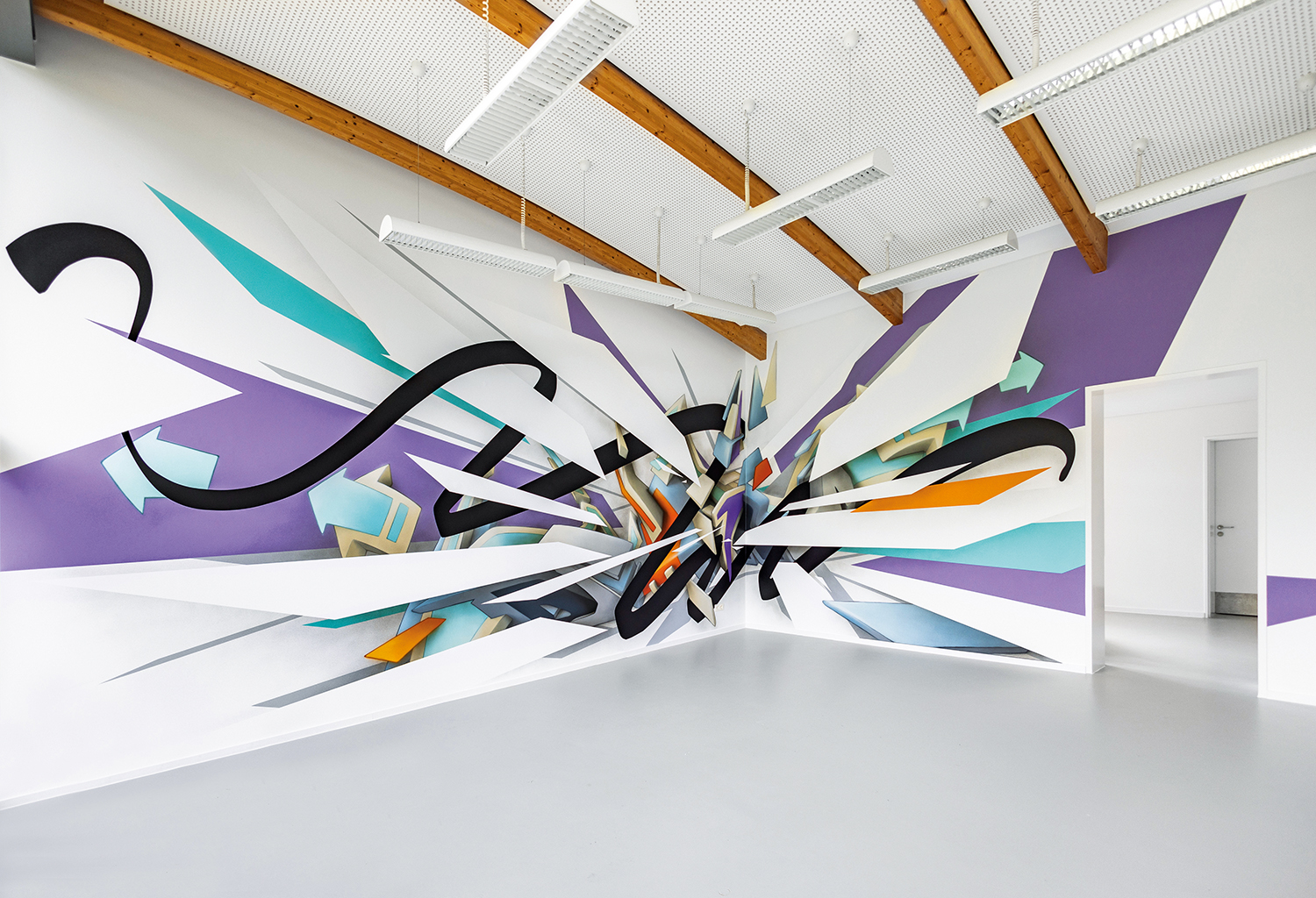
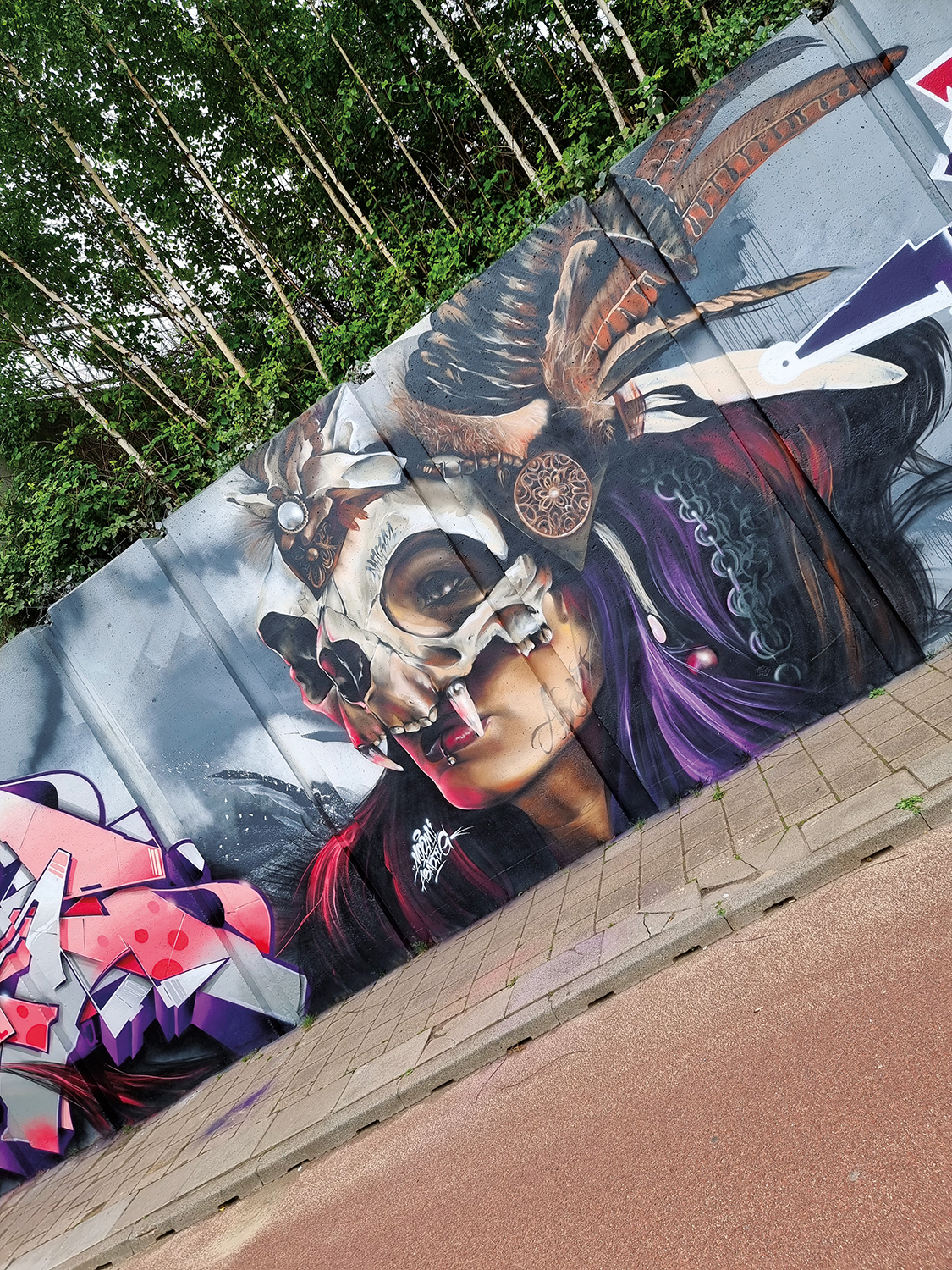
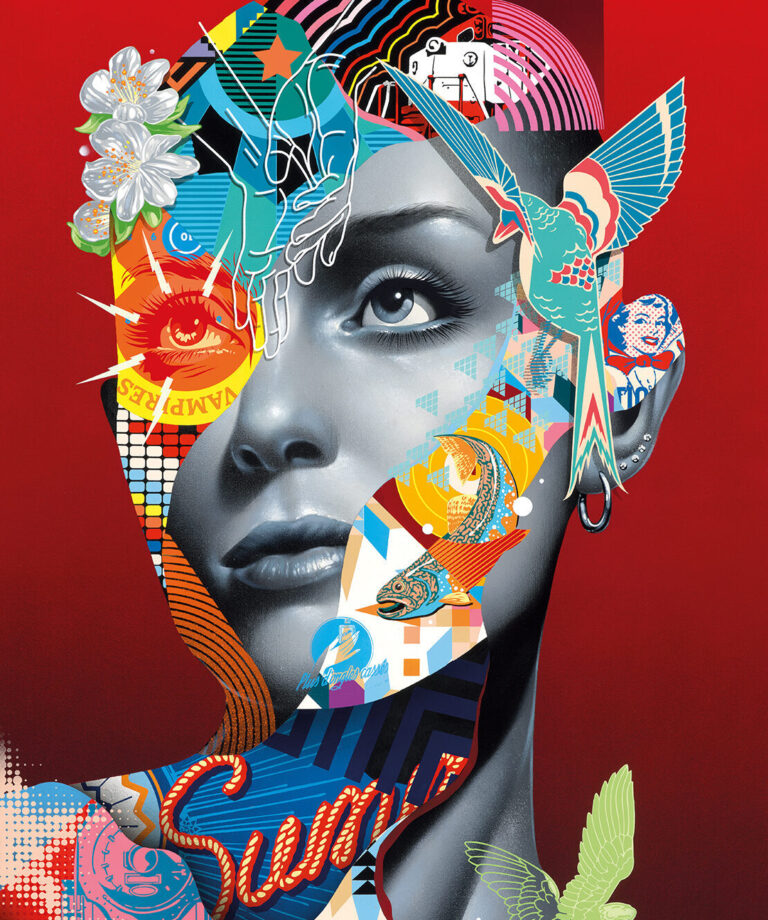
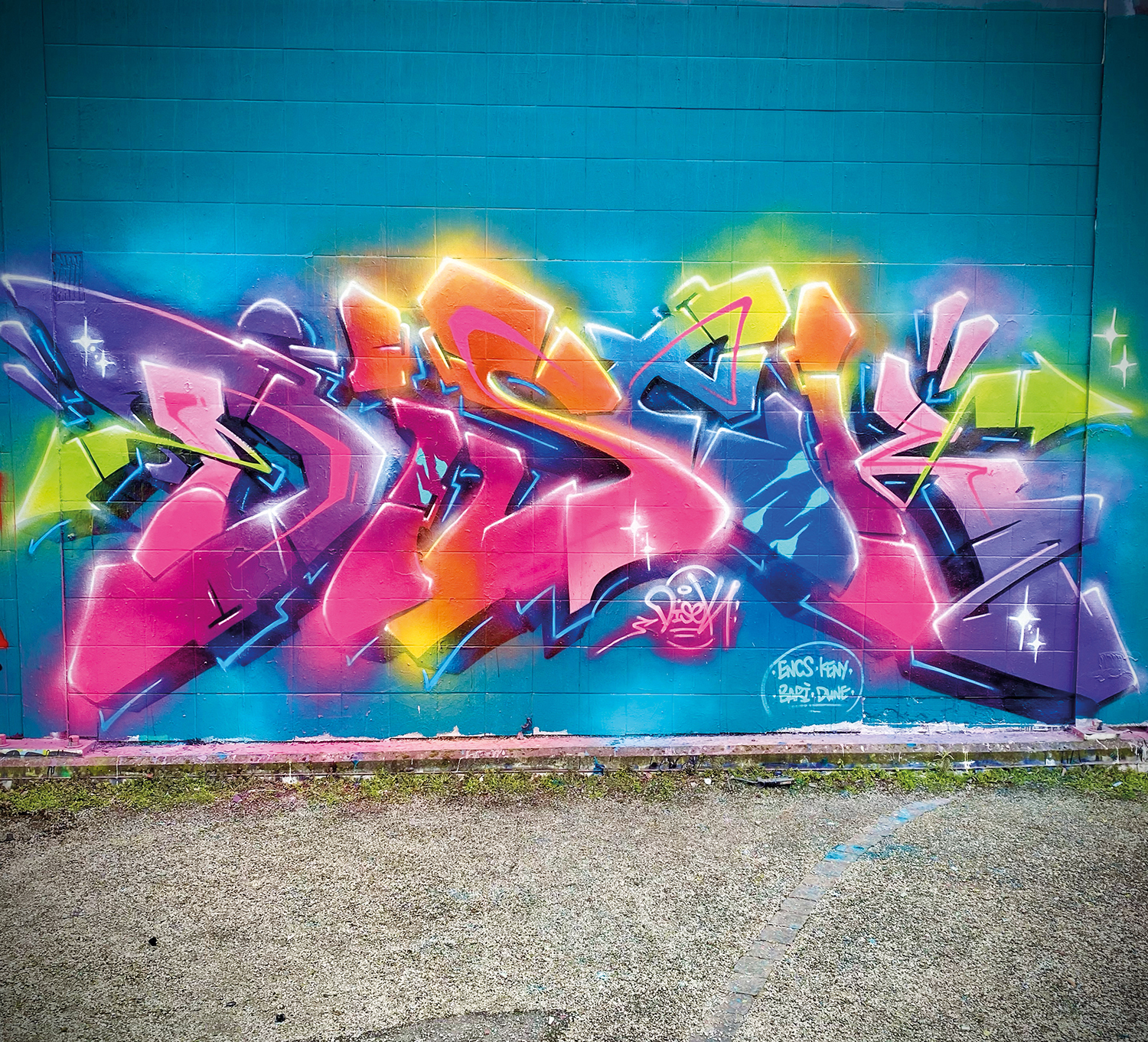
Trained in the graffiti underground scene of the late 1990s, Mehdi Mlc has developed a distinctive artistic approach. Blending technical mastery with symbolic richness, he weaves a world that is both rigorous and vibrant, infused with positive narratives. In dense compositions with multiple layers of meaning, where every element carries significance, hibiscus flowers, figures, and butterflies form a visual vocabulary that celebrates the power of multicultural beauty while questioning our relationship with life. Behind this abundance, the message remains clear: to make graffiti a vehicle for emotions and ideas, and to transform raw energy into a constructive force.


You’ve always drawn, but you started doing graffiti in 1997. What memories do you have of your early days?
As a kid, I drew constantly, often with just a pencil or a Bic pen. Graffiti came later. I started when I was 11 or 12, surrounded by older graffiti artists who took me under their wing… An incredible experience! In the late 1990s, the hip-hop movement was still very underground, complex, almost inaccessible—especially for a kid. That early immersion in a clandestine world had a lasting impact on my journey. Even though I tried my hand at breakdancing and beatboxing, I chose graffiti because it was a natural extension of my love for drawing.
Do those years still shape your practice?
They had such a profound impact on me that I remain connected to the authenticity of the movement. The codes, the guiding principles, and the ideology of that era continue to resonate within me. My practice bears the mark of that era through the tools I use—the ones from my early days and the way they were used back then. In my pen drawings as well as my spray-paint works, I always strive to capture the raw spirit of graffiti.
You chose lettering. Why did you make that choice when you were already drawing?
I’ve always been good at drawing, but I lacked creativity—at school, people even suspected I was tracing [laughs]. Graffiti helped me grow by introducing me to a form of healthy competition. Working with letters forced me to create my own forms—copying existing lettering was unthinkable back then—to assert my identity to impress others, and to constantly improve. That fueled my creativity, while drawing gave me a solid foundation to explore graphic design more broadly.
How did you transition from lettering to figurative art and abstraction?
I grew up in Rennes, a city that was very active on the graffiti scene back then—it was called “Little Paris” because it attracted so many graffiti artists from elsewhere, while also fostering a strong and unique local scene. My work drew inspiration from this diversity—I explored flops, wild style…—which made my approach to graffiti quite comprehensive. And since I was drawing at the same time, the transition from lettering to figurative art or abstraction happened naturally. Isn’t one of the foundations of hip-hop to always push oneself, surprise, broaden one’s horizons, and think outside the box? From my very first exhibitions in 2004, I was already presenting canvases rooted in the graffiti tradition—working with letters and calligraphy—with backgrounds created in acrylic and brush. My training as a lettering artist also opened me up to other techniques—set design, trompe-l’œil…—which have enriched my practice. This interdisciplinary approach now allows me to blend styles, reach a wider audience, and offer a more open interpretation of my work.
We can still recognize your style,
though… I hope so… I think that, beyond the themes themselves, the more complete your artistic world becomes and the more distinct your unique technique is, the more your work gains in power and clarity.
Isn’t that unsettling for some people?
Undoubtedly, but haven’t the greatest artists in art history explored different styles? The hardest part is probably delving deeply into each one, because it’s a never-ending task. So I’m developing several areas—graffiti, comics, hyper-flashy Pop Art-style colors, materials, textures… I’ve even created two totems: Los Narvalitos and Althéa. This demanding process is exciting, but it requires a considerable commitment. I love this performance aspect, which I inherited from graffiti.
Tell us about these two totems.
My work revolves around two complementary totems. Los Narvalitos, subversive characters that are half-angel, half-demon, embody the emotional and intellectual duality inherent in each of us. Their playful appearance allows me to draw a wide audience into my world, from children to adults. Featured on walls as well as on my canvases, they create a link between the street and the gallery: those who encounter them in public spaces seek to find them again in my works. Althéa, the Latin name for the hibiscus, is the magical and deeply feminine world in which Los Narvalitos live. The hibiscus is a symbol of ideal femininity inspired by the richness of the tropics—the flora, fauna, and cultural blending—and evokes Gaia, goddess of the Earth. Driven by the idea that hybrid beauty is a force, my characters inhabit this imaginary plant world, a reflection of a very real nature that is currently suffocating. This is my way of questioning our relationship with the Earth and delivering an ecological message through an imaginary world open to all.
So your work moves between letters, characters, flora, and fauna… Is this to create a more narrative-driven story?
The stories do indeed build upon one another, because every element has a meaning. The hibiscus embodies the perfect woman, and each of its colors carries a meaning. I also use the butterfly—a symbol of positive yet fleeting metamorphosis, much like graffiti—or the ladybug, which evokes perseverance. I also pay close attention to the number of elements. Even in abstraction, I’m influenced by Mexican ex-votos, which are rich in symbolism. My stories mostly carry positive messages, which I want to be open to interpretation. I deliberately push the principle of visual saturation, particularly through the accumulation of elements, to offer multiple levels of interpretation. This density is a constant in my work.
If you had to describe your world…
I’d call it magical—a way to escape reality, yet always grounded in the real world. It’s an escape, both for me and for the viewers. There’s always a story, a reaction to what’s around me, to what I see, to what I witness, and to what deeply affects me. Certain political decisions have direct repercussions on our lives, particularly in the Indian Ocean where absurdities abound. One of my pen drawings, for instance, depicts the face of a mixed-race woman, a turban on her head and tears in her eyes. It evokes the crisis in Mayotte, when the French government sought to deport undocumented migrants—nearly a third of the population—to the Comoros, which refused to accept them, thereby condemning many of them to certain death by drowning and leaving behind children born on French soil as orphans. When you’re mixed-race and grew up in public housing, you become aware of injustices at a very early age. The hip-hop scene, with its culture of protest and social and political activism, only reinforced that perspective.
And yet, your work remains positive…
I try to transform my graffiti—which, back in the days of vandalism, was an act of aggression, a cry, a scream—a form of the people’s writing, charged with unease, suffering, and anger—into something positive. Without ruling out reflection, the idea is to transform this raw power into constructive energy. But I remain true to my culture and my convictions: I’ve simply found a smarter, more mature, more strategic, and therefore more persuasive way to convey them.
Your practice is based on very advanced technical research. How did you develop it?
Beyond the aesthetic or style, I make a point of prioritizing technical mastery. So I try to push my tools to their limits—whether it’s a pen or a spray can—while still using the basic tips I started with in the late 1990s. My intention is to elevate these tools—which are often looked down upon and rarely associated with art—to make them noble. This allows me to develop a unique technical style, consistent with my artistic vision, while remaining connected to graffiti.
Do you also paint on surfaces other than canvas and paper?
In my work, I don’t set any limits for myself: I love exploring all kinds of surfaces. I paint a lot of vehicles, including factory-made cars. It’s a surface I really love, because it echoes the movement’s origins—the graffiti painted on trains and subway cars. I also paint surfboards—similar to skateboards—in various sizes with spectacular results. Seeing one of your pieces glide down a wave is a real pleasure… I’ve also customized lamps, clothing…
Has your perspective on the world changed since you moved to Réunion?
Yes, definitely. I grew up in a public housing project, so traveling and then settling in Réunion was a real eye-opener, even though the island setting is both enriching and limiting when it comes to artistic practice. I drew inspiration from everything: nature, culture, traditions… Whereas in mainland France I was one of the first to organize workshops focused on the hip-hop movement, my arrival in Réunion confronted me with a striking disconnect, which refocuses you and forces you to reevaluate your priorities. There, I met people from very humble backgrounds, yet endowed with impressive practical knowledge—particularly regarding plants—and a rare self-reliance, forged by the necessity of living in direct connection with their environment. This deeply moved me.
Over the past 17 years, have you traveled elsewhere?
I’ve traveled as much as possible. I regularly made trips back and forth to mainland France to paint, and I’ve also been to Spain, Croatia, Montenegro… In the Indian Ocean, I had the chance to visit other islands and paint there… even though it’s very difficult to get around with thirty or forty spray cans. It’s almost like an expedition: a real conquest. But graffiti—art in general—remains a struggle, a battle. It’s part of the game.
What are your plans?
After my exhibition at Villa Fleuri in Réunion, which ends in late November, I’m preparing to return to mainland France with new exhibitions planned for some unexpected venues.
Not to be missed:
Solo exhibition
Through November 16, 2025
Villa Fleurie
84 allée des Topazes – Bellepierre
97400 Saint-Denis, Réunion
Permanent Exhibition
ALC
28 Rue du Pressoir, Block 8, Unit 3,
97434 Piton Saint-Leu
Mehdi Mlc: @mehdi.mlc